Q4 email marketing strategy for ecommerce: the 3-part system for BFCM 2026
Watch the 15-minute version
TL;DR
Ad costs explode in Q4, so the stores that win are the ones whose email turns more of that expensive traffic into buyers. The system has 3 parts. List building (your offer, a gamified popup and 5 psychological triggers). Automated flows (welcome, abandoned and post-purchase, with three Q4 tweaks, one of them being turning off smart sending). And campaigns (wider segments, a hyped up lead-in, rotating offers and a lot more sends). Black Friday is November 27 this year, so there's still time to set all of this up.
Ecommerce is a game of constraints. You're always limited by something. Your ad budget. Your stock. The hours in your day.
And in Q4 all three get squeezed at the same time.
The question
So how do you crush your email marketing this Q4 as a busy ecom owner?
Without having prepped for months. And without paying an agency thousands of dollars for results you'll have little or zero control over.
I ran an email marketing agency for almost half a decade, and Q4 was always the most chaotic part of our year. Every single time. Even with our systems dialed in. So this is the updated playbook we'd use for Q4 2026, whether you're at five, six, seven or even eight figures. (The video above goes through all of it in about 15 minutes, if you'd rather watch.)
01Why email, why now
Why even bother with email in the busiest part of the year?
Q4 is when all the buying desire that's been building up for 12 months finally gets cashed in. Everyone in ecom knows it. So every brand piles into ads at the same time, and ad costs go through the roof.
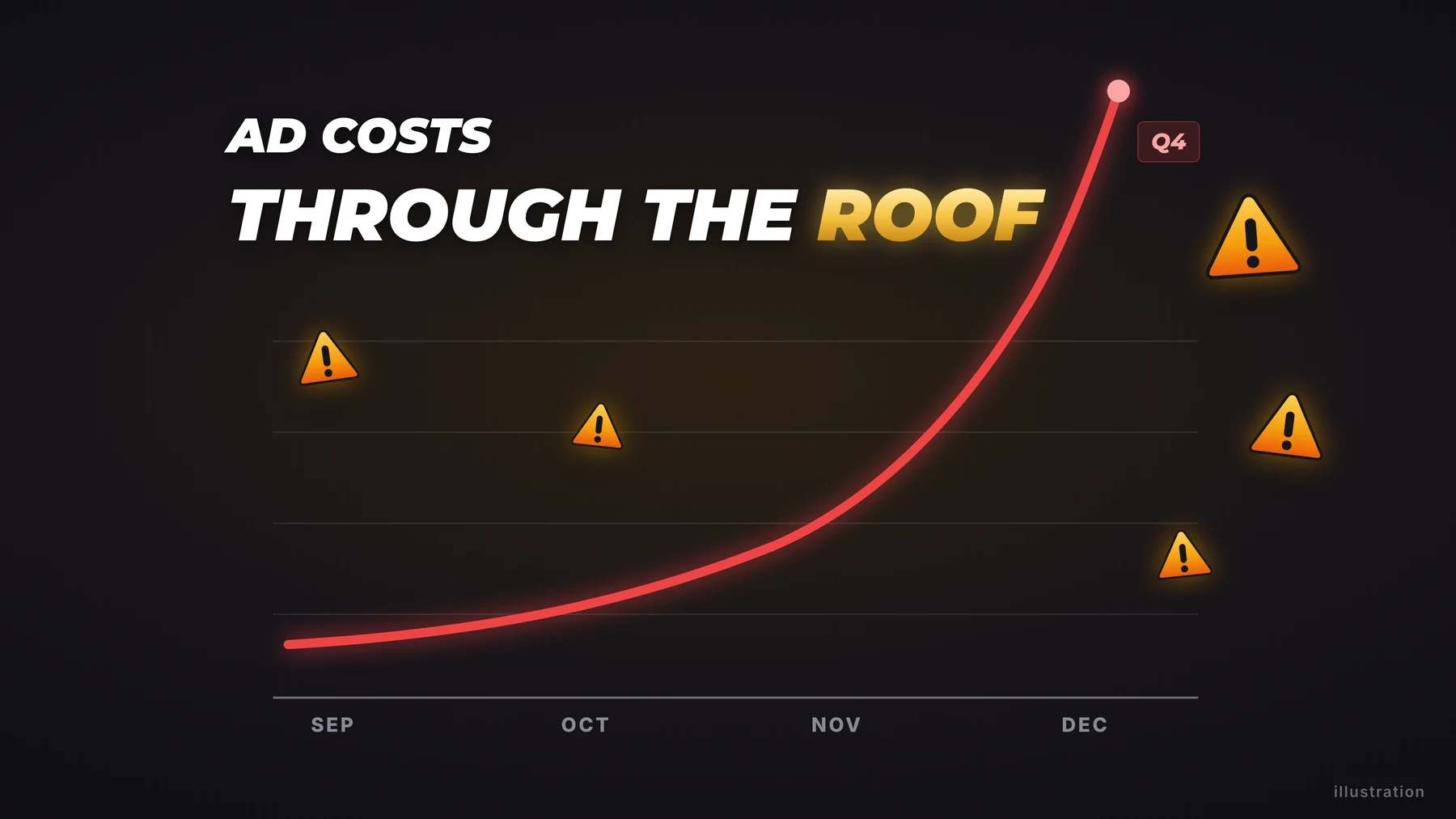
Which means the stores that win aren't the ones spending the most. They're the ones getting the most out of every visitor they already paid for.
A solid email back end does that for you three ways. It turns more of your visitors into customers right away, with a popup and pre-purchase flows. Over time it turns those customers into repeat buyers, with post-purchase flows and campaigns. And all that extra profit goes straight back into ads and scaling.
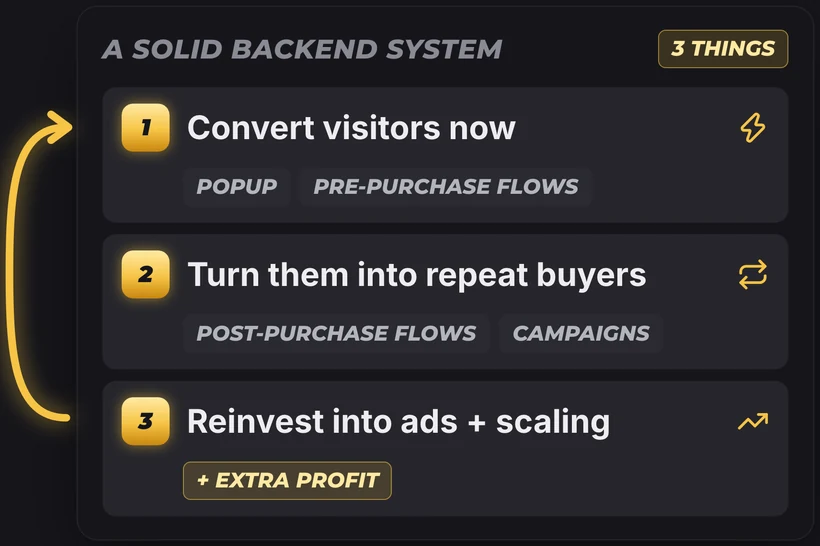
The bonus? Even in the short term, it opens up a gap between you and every competitor who doesn't take email seriously.
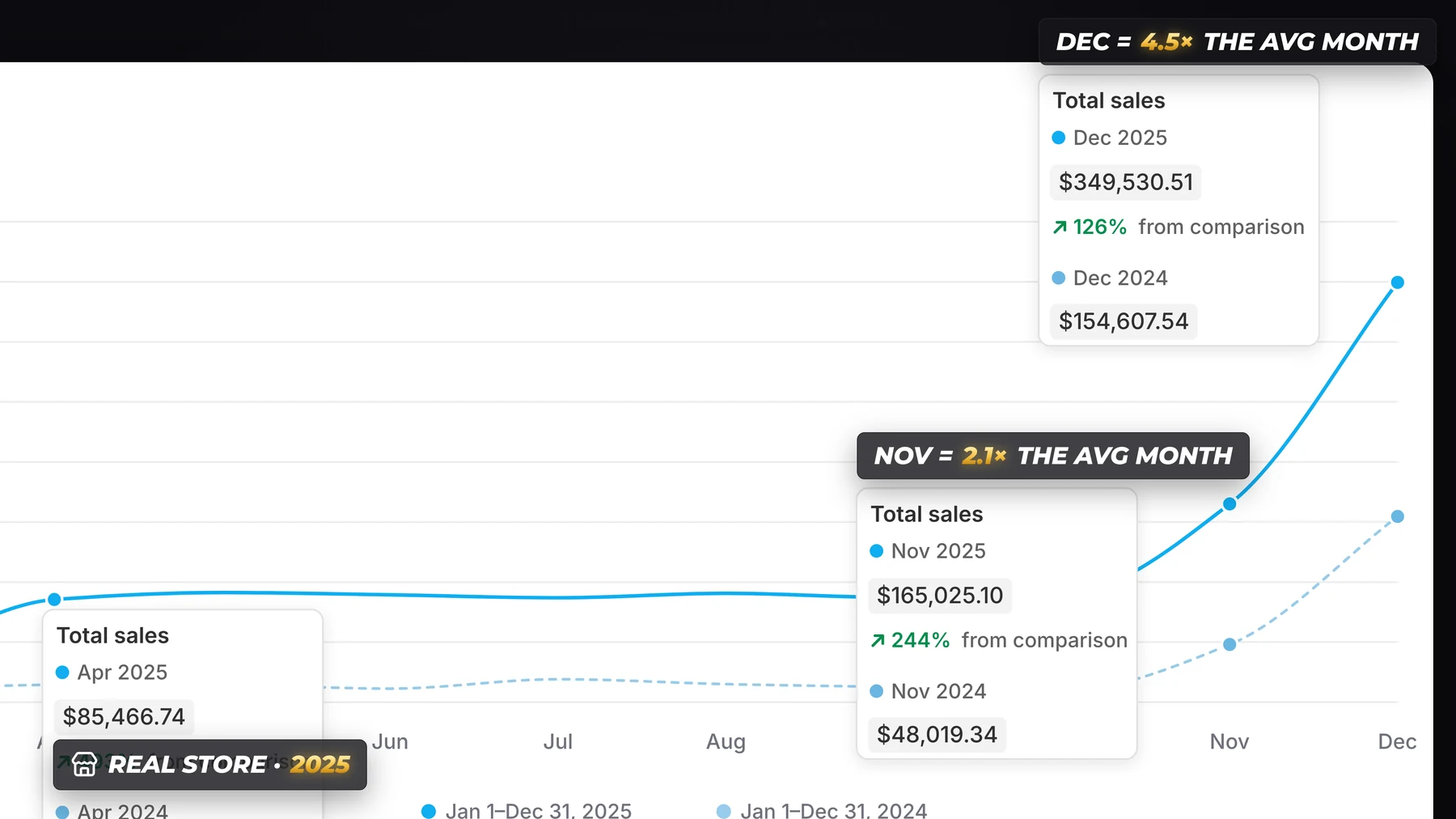
Just to give you an idea of what's possible. One store we worked with did 2.1x its average month in November and 4.5x in December. That's total store sales compared to its January to October average. Not a typo.
2.1x
November, total store sales vs its January to October average month.
4.5x
December, same store, same comparison.
The framework behind results like that has 3 parts.
- 01List buildingOffer, popup, the 5 drivers.
- 02Automated flowsWelcome, abandoned, post-purchase.
- 03CampaignsSegments, hype, offers, more sends.
02The most important one
Part 1: List building
Here's why list building comes first. If you double the number of people joining your list, you double the number of people who see your flows and campaigns. Without changing a single email! Your email results basically double on the spot.
So in Q4, three things matter here.
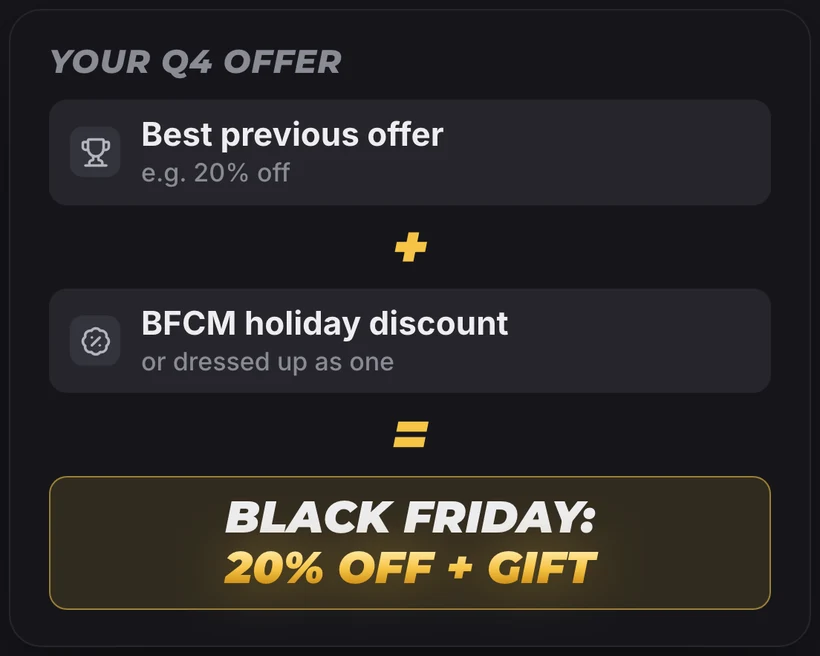
Your Q4 offer
Nail the offer and everything else in your popup is the cherry on top. For most stores I'd take your best offer from earlier in the year and either combine it with a BFCM discount or at least dress it up as one. People should feel like it was made for right now.
A popup structure that converts
The structure decides which steps someone has to go through to get on your list. For most brands in Q4 2026, gamification is the way to go. Spin wheels, scratch cards, mystery boxes, that kind of thing. They feel like a game you can win, and they convert way better than a plain "10% off, enter your email" box.
The 5 psychological drivers
A good structure gets people to start. These five are what make them finish:
- 01Mystery.A hidden discount plays on the information gap. People just want to know what's behind the box.
- 02Commitment.Once someone has started (spun the wheel, picked a box) they're a lot more likely to finish.
- 03Loss aversion.If they feel like they already won something, they don't want to lose it. So they finish the signup just to keep it.
- 04FOMO.We've all felt it. If other people are getting this, I shouldn't miss out.
- 05Urgency and scarcity.Stock moves fast in Q4. Put a time limit on the discount and actually stick to it.
The goal for this period is pretty simple. Get as many people onto your list as humanly possible.
And the gap here is huge.
2 in 100
The average popup gets about 2 out of every 100 shoppers to sign up.
13 in 100
MailCommerce popups, based on real store examples, average around 13 out of 100.
If all of that sounds like a lot to dial in, it is. That's why we built the popup feature in MailCommerce AI. It reads your store and builds a gamified popup in your brand's look for you, automatically. And it's free for Shopify stores right now: get your popup here.

03Automated flows
Part 2: Your automated flows
Once people are getting on your list, you have to hit them with the right message at the right time. That's what flows are for.
The welcome series
This fires when someone signs up on your popup. It introduces your brand and reminds them about the offer (the whole reason they signed up). If they don't buy right away, the next emails build trust with social proof and deal with the doubts they have. Is it worth the price? Will it work for me? Why buy from you and not the other guys?
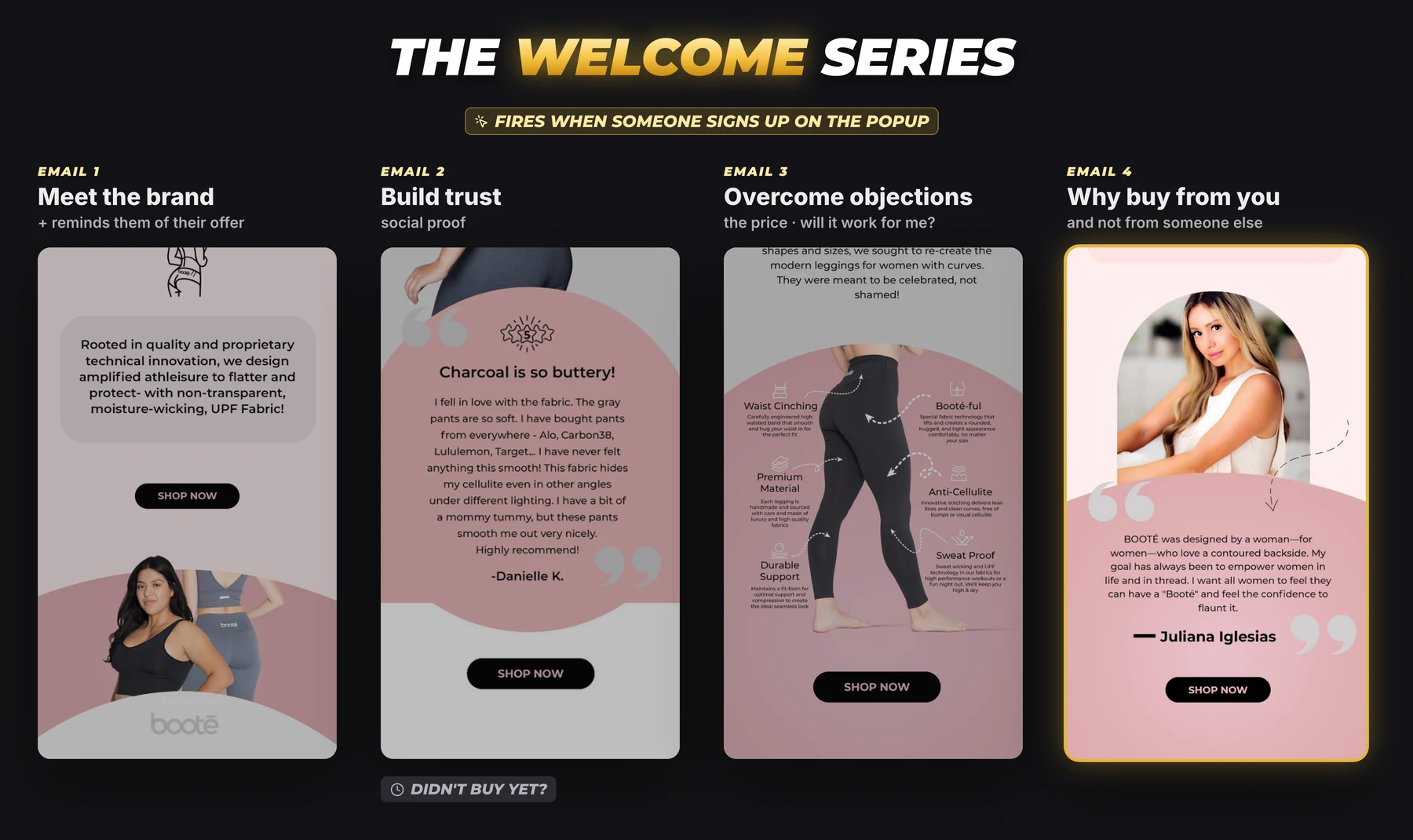
Full breakdown here: welcome email sequence guide.
Abandoned flows
These trigger when someone looks at a product, adds to cart or starts checkout without buying. Because they're based on what the person actually did on your site, they can talk to exactly where that person is in the buying process.
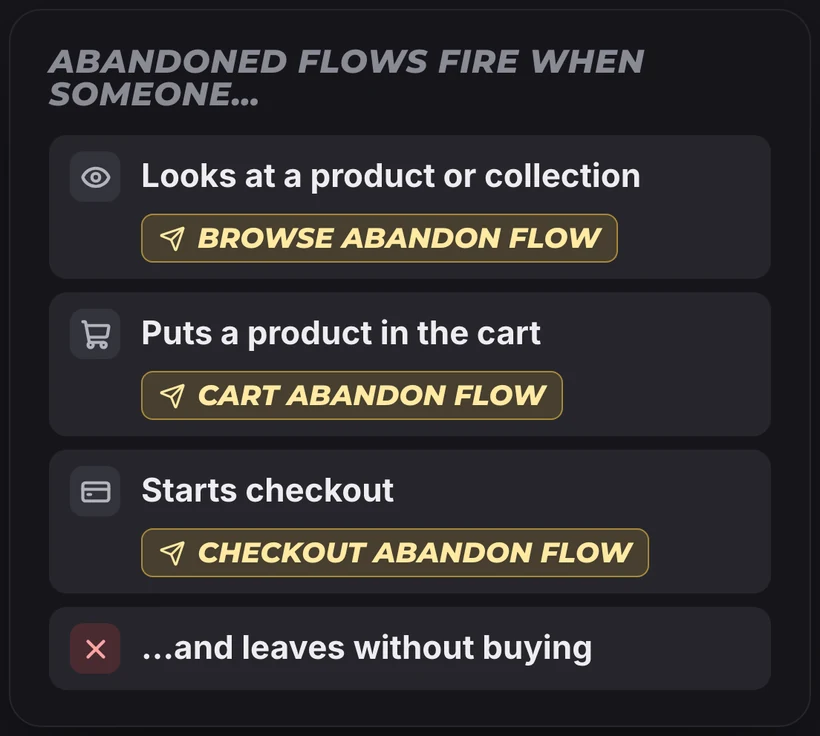
Someone who started checkout with a few products in their cart is a much more committed buyer than someone who just browsed a product page. So they need a different message to get them over the line. More on that in our abandoned cart emails and browse abandonment emails guides.
The post-purchase flow (where your AOV is hiding)
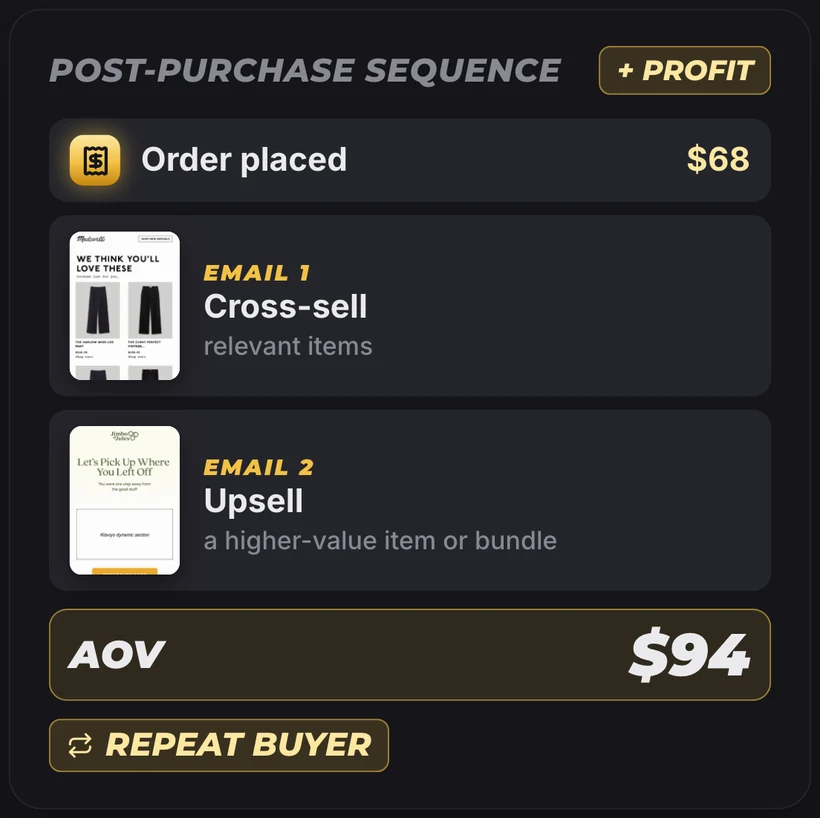
A lot of stores overlook this one. Nobody in your store's whole ecosystem is more ready to spend money with you than someone who just bought. So every single order is a chance to squeeze more out of it, either by cross-selling related products or upselling to a bigger bundle.
Do this well and your average order value goes up on every customer. And because they had a great buying experience, they're set up to become repeat buyers. Here's the post-purchase email sequence guide.
3 Q4 tweaks for your flows
Here's the catch though. If your flows run exactly the same in Q4 as they do in March, you're leaving money on the table. Three small changes make a massive difference:
- 01Shorten the delays.If your welcome emails normally go out a day apart, try 8 to 10 hours between them in Q4.
- 02Get to the discount faster.I'd never say this the rest of the year, but in Q4, if your flow gives a discount, get there sooner. And pack the emails before it with social proof, FOMO and urgency.
- 03Turn off smart sending on your flows.Not a preference. You have to do this.
That last one needs a quick explanation. Smart sending is a setting in most email tools (Klaviyo literally calls it Smart Sending) that skips an email if that person already got one from you recently. In Q4 you're sending a lot, so it will start skipping your flow emails. And your flow emails are your highest impact emails. You don't want a single one of them skipped.

04The missing 50%
Part 3: Campaigns
So list building is sorted and your flows are running. You might think you're done now.
You're not. If you stop here, in my experience you're missing out on about half the extra revenue email can bring in during Q4. That's what campaigns are for, and they work differently in Q4 than they do in Q1 to Q3.
Widen your segments (a bit)
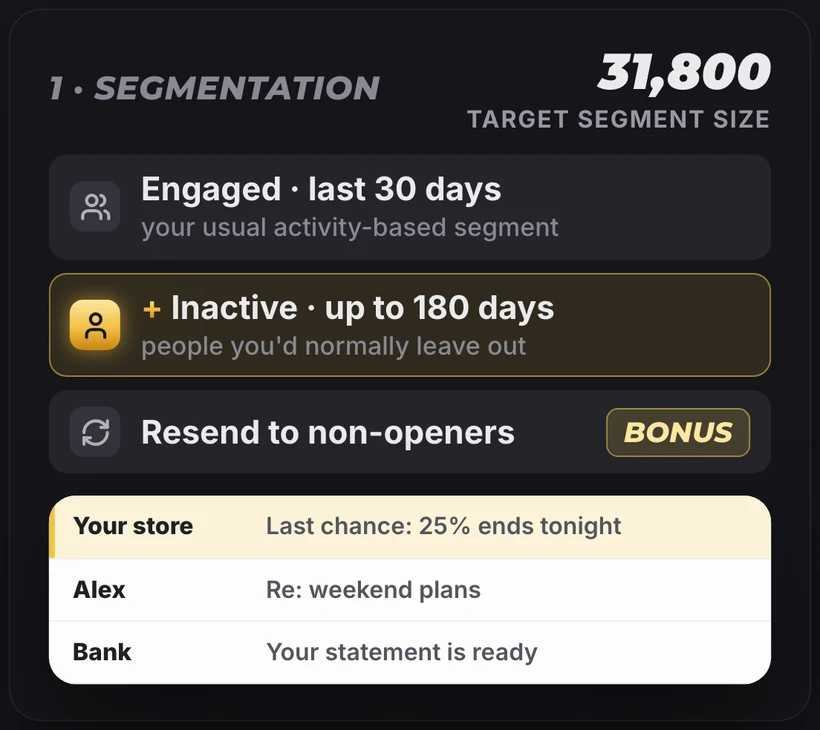
I'm not saying throw segmentation out the window. But in Q4 you can stretch your engagement segments to include people who've been inactive for a little longer. Stretch the window, don't delete it.
Bonus tip. Most email tools let you resend a campaign to non-openers, or build a segment of people who didn't open the first one. Do it. More people end up seeing your email at the top of their inbox. (Basics here: ecommerce email segmentation.)
Hype up the lead-up to BFCM
In the weeks before Black Friday, hype it up hard. Give your list tons of value and build up real anticipation. Sneak peeks, early access lists, countdowns, whatever fits your brand.
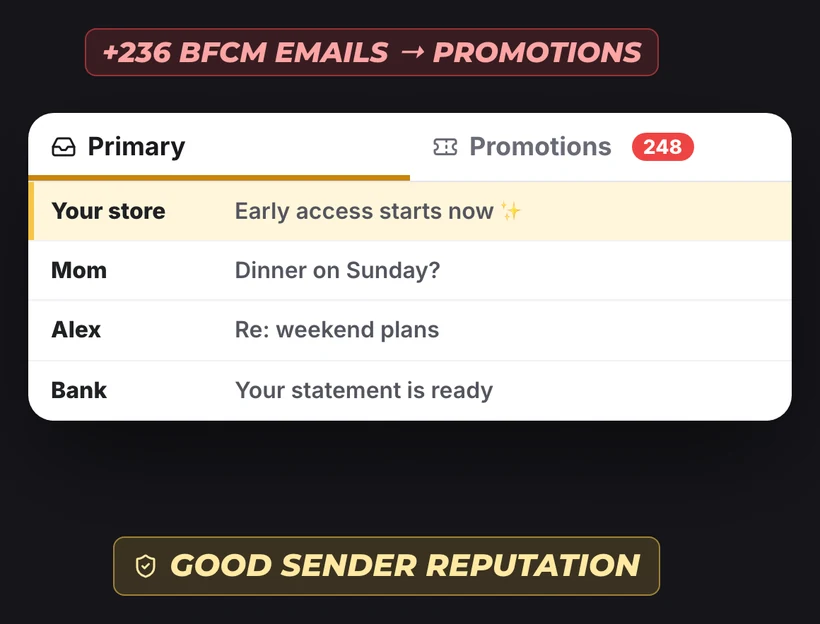
And there's a hidden bonus. Good engagement before BFCM (opens, clicks, even replies and forwards) also helps your deliverability. So when Black Friday hits and everyone's inbox is flooded, your emails still land in the primary tab, because you've built a good reputation with the inbox providers.
Rotate your offers
Keep your offers fresh and new. Even if the core offer underneath stays the same, change how you package it every time. Some ideas:
- Early access for your VIPs (or the whole list)
- Mystery discounts
- Percentage off
- Mystery gifts
- Dollar value discounts or store credit (this one's been a bit overused lately, honestly)
- Flash sales
The refund trick that beats 15% off
Here's one of my favorites. Say you'd normally run 15% off. Instead you announce that you'll refund every sixth order in full.

On average it costs you about the same, somewhere around 16 to 17% of sales. But how much better does it sound? If I'm one of those six, my whole order might be free. That's way more exciting than 15% off, and it's the same offer underneath, just packaged differently.
(Quick note: depending on where you sell, a promo like this can fall under prize or sweepstakes rules. Check what applies to you before you launch it.)
Send more campaigns
Last thing. Turn off smart sending for most of your campaigns too, if not all of them. And then send more. More emails means more opens and more clicks back to your store from people who already know, like and trust you.
So if you normally send two to four emails a week, bump it up to at least one a day for Q4. With a big enough list, even more than one a day. Need help planning it out? Here's our 2026 ecommerce email calendar.

05The shortcut
Too much manual work? There's a shortcut
If you skip any of these pieces, your Q4 results suffer. And Q4 is the biggest scaling chance of the whole year.
But if all of this sounds like a whole lot of manual hassle, I totally get you. Like I said, even with our agency systems Q4 was chaos.
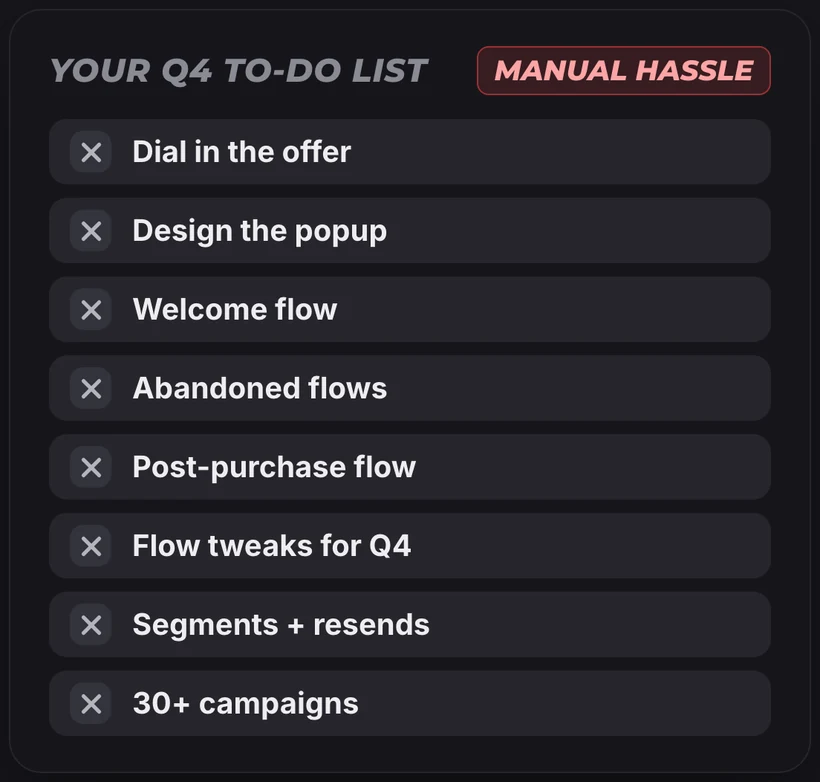
And no, the answer isn't paying an agency thousands a month. It's a tool you (or someone on your team) can set up today and have running for the rest of Q4 by tomorrow.
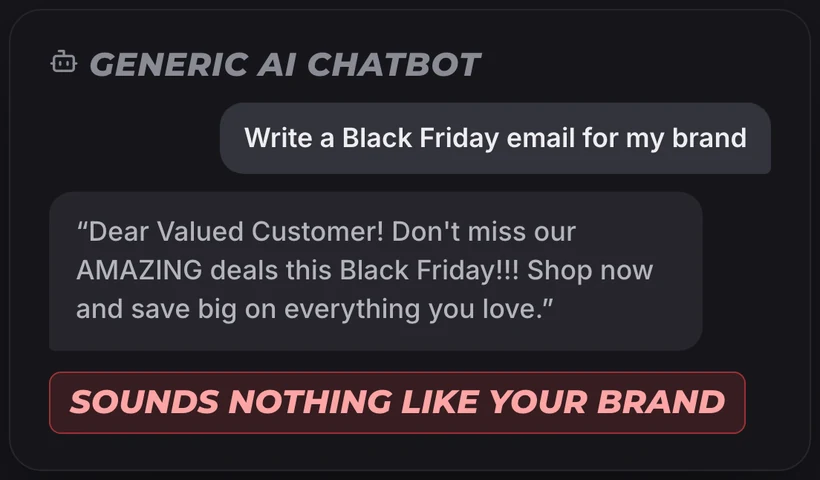
MailCommerce AI isn't some generic AI chatbot that writes copy that sounds nothing like your brand. It's built for busy ecom owners and operators. It analyzes your store, your positioning, your tone of voice and your design. Then it builds your popup, your flows and your campaigns, all on-brand, and sends them for you too.

Honestly, it's the tool I wish we'd had back when we started the agency. It would've saved me countless hours of headaches. And a frankly ridiculous amount of money in execution costs.
Free for Shopify stores
Get a popup like these, built in your store's look
You also don't have to commit to anything to find out if it works for your store. The popup feature is free for Shopify stores. Drop in your store URL, watch it build a popup in your store's look, and have it live in a couple of minutes.
The popups above are live. Nothing you type in them is sent anywhere.
FAQ
Q4 email marketing questions, answered fast
When should I start my Q4 email marketing?
Honestly? Today. You don't need months of prep for this, I promise. Get the popup and your flows live first (those keep working every day without you touching them). And then in the weeks before Black Friday, which is November 27 this year, start hyping it up.
How many emails should I send during Black Friday and Cyber Monday?
Way more than feels comfortable. If you're used to 2 to 4 campaigns a week, go to at least one a day for Q4. Got a big list? More than one a day is totally fine. Your flows keep running in the background the whole time anyway.
Should I turn off smart sending in Q4?
On flows, yes, no debate. If it stays on, your best emails get skipped just because that person got a campaign from you yesterday. Which is the exact opposite of what you want in November. For campaigns I'd switch it off on most of them too. Probably all.
What's a good Black Friday offer besides a straight discount?
Mix up the packaging, even if the deal underneath stays the same. Early access, a mystery discount, a mystery gift, a flash sale. My personal favorite is the refund trick, where instead of 15% off you refund every sixth order in full. Costs you roughly the same (16 to 17% of sales) and people get way more excited about it. Just check your local sweepstakes rules before you run it.
Which email flows matter most in Q4?
The welcome series, your abandoned flows (browse, cart, checkout) and post-purchase. Then give them the Q4 treatment. Delays down to around 8 to 10 hours, the discount shows up sooner, and smart sending goes off on every one of them.