Post-purchase email sequence
The most consistent mistake in post-purchase flows is leading with a cross-sell in the first email. The package hasn't arrived. The buyer doesn't know yet if it was worth it. And the first email is already asking them to buy something else.
If that's how you start, what you've communicated is: I was done with you as soon as you checked out. Some will buy. Those buyers tend to spend less, buy less often, and leave sooner — trained from day one to treat you as a store that pushes products, not a brand worth staying around for.
The cross-sell belongs later in the sequence. After the order arrives. More on the exact timing below.
That said, this is just one piece of it. The wider pattern is stores treating the entire post-purchase period like a logistics function — confirm, ship, deliver, done. Just a tracking number.
What's going on after the sale
Order confirmed. Shipped. Delivered. That's the whole sequence for most stores.
What doesn't get talked about much: right after checkout, the pressure of deciding is gone. What settles in is quieter — wait, did I get this right? Will it show up? Is the brand legit? Did I overpay? Not dramatic doubts. Just background noise that either gets resolved or doesn't.
The emails you send in that window can speak to this directly. Show up with something that matters and you're building toward a second order. Say nothing useful and that noise becomes "I'll wait and see how this one goes before I spend anything more here."
More than half of what a customer will spend with you happens in the first 90 days after that first purchase. Most stores send nothing worth reading in that window.
What the sequence looks like
Start immediately. Someone orders and the email lands before they've clicked past the confirmation page. Not within an hour. Now. Most platforms let you set this in the trigger settings.
Don't make the email about the order number. Make it about them — what the purchase is actually for, what the experience will be like when it arrives. Not the features. The feeling. A supplement that makes mornings easier. A bag that ends the repacking-every-trip thing. A skincare product that means they stop covering things up. The more specifically you paint that picture, the more you're telling them they made the right call.
Ask for a reply. Literally just "anything you want to know before it arrives, reply here." It sounds too simple to matter. It consistently does more for deliverability than most technical fixes — a real reply from a subscriber is one of the strongest signals inbox providers use. And it opens a direct line before the customer ever has to go looking for support on their own.
Day one or two: the package is still in transit. The post-purchase excitement has settled, which is normal. This is where you rebuild it.
Go deeper on the product. The quotes that land best here come from people who were skeptical before they bought and came around after — the "I wasn't sure this would work for me but..." kind — because that's almost certainly where this buyer's head is right now. Not the polished five-star copy from your review widget. The specific, messy, "this is what actually changed for me" version. Also worth giving them a rough sense of what to expect from you going forward. Not a schedule. Just a picture.
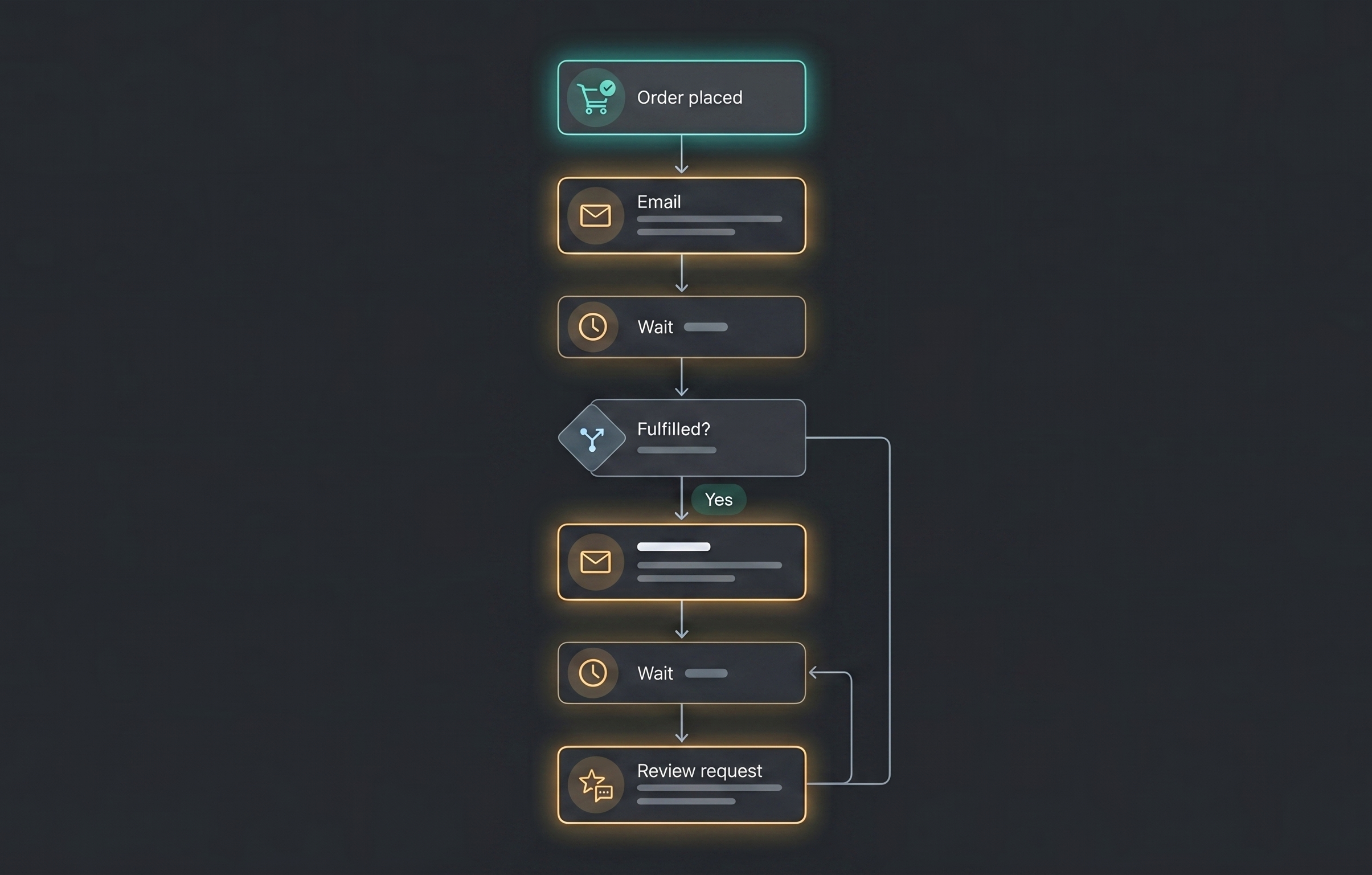
Third email is the cross-sell — but only after the order is fulfilled. There's a trigger filter in Klaviyo a lot of people miss: "Fulfilled Order" not "Placed Order." Easy to skip when you're building fast. If you reference how they're feeling about the product before it's even arrived, the email reads wrong. Like asking someone what they thought of a movie they haven't seen yet.
For the cross-sell itself, make the connection specific. Coffee subscription buyer, point them toward a grinder. Not something random from the catalog — the thing that makes what they already bought more useful, with an actual reason for why. Not "you might also like" but more like: you got X, here's why Y makes sense with it. The tighter that connection, the less it reads as an upsell.
Two to three weeks post-fulfillment is when you ask for the review. They've actually used the thing by now and the experience is still recent enough to matter. Most stores skip this or bury it in a shipping notification. Stand-alone email, one ask, obvious button. Worth telling them where the review ends up — your product pages, to help the next buyer decide. People are more likely to write one when they know it lands somewhere real.
This is also the right moment to bring up whatever the longer relationship looks like. Loyalty program, community, that kind of thing. The buyer is still warm here. Better than a cold campaign six months from now.
First-time buyer vs repeat buyer
The same flow running for a first-time buyer and someone on their fourth order is a missed opportunity. These are genuinely different situations.
A first-time buyer needs everything above: the trust-building, the reassurance, the careful cross-sell timing. Someone who's bought from you three times already has all of that. They don't need to be introduced to the brand. What they want to know is that you noticed they came back. That's a different email entirely.
A conditional split on order count changes what the first two emails say. The returning buyer gets something that acknowledges they're back — a first look at what's new, a loyalty note, that kind of thing. In Klaviyo this runs through a conditional split. On Omnisend the same logic works through automation branching. Usually a two-minute setup change that affects every future purchase.
The gap in conversion rate between an email that feels like it was written for someone and one that was sent to a list they happen to be on is real and consistent.
How long to run it
Four to five emails covers the window for most ecommerce categories. For premium products with longer ownership cycles — furniture, anything with a real learning curve — you can go longer. Someone who bought an espresso machine probably has questions at week two they didn't have on day one. Worth showing up for that.
What to cut is padding. An email that exists because someone decided "we should have a 30-day touchpoint" reads exactly like that. If there's no real reason to send it, don't.
When the sequence runs out, the customer moves into your regular campaign list. Someone who just finished a post-purchase flow is not the same as someone who signed up six months ago and never bought. The segmentation guide covers how to treat that difference in practice.
The production problem
Stores that run this well consistently call it one of their best automations. The ones that don't — and most don't — stall in the same place every time.
Setting up the flow structure takes an afternoon. Writing and designing four or five emails per segment, first-time and returning buyer variants, across multiple product categories — that's where the project becomes lengthy.
MailCommerce AI generates the full post-purchase sequence from your store URL. It reads your catalog and brand, then builds emails with tailored copy and design for the flow, allowing you to improve the customer experience after purchase, convert buyers into loyal returning customers, and providing you the right tools for upsell, cross-sell, and standing out above competitors.
Free to try, no credit card required. Start here.
How it fits in with the rest of your flows
The welcome sequence handles new subscribers before they've bought anything. Post-purchase takes over the moment they do. Once the sequence runs out, the segmentation guide covers how to treat buyers differently from non-buyers in your regular sends. Running the same newsletter to both groups dilutes what makes each one useful.
One more thing if you're running browse abandonment or cart abandonment flows alongside this: get the suppression right. A buyer who just purchased doesn't need a cart recovery email for something they were looking at pre-checkout. That just feels off — and it'll hurt your deliverability.